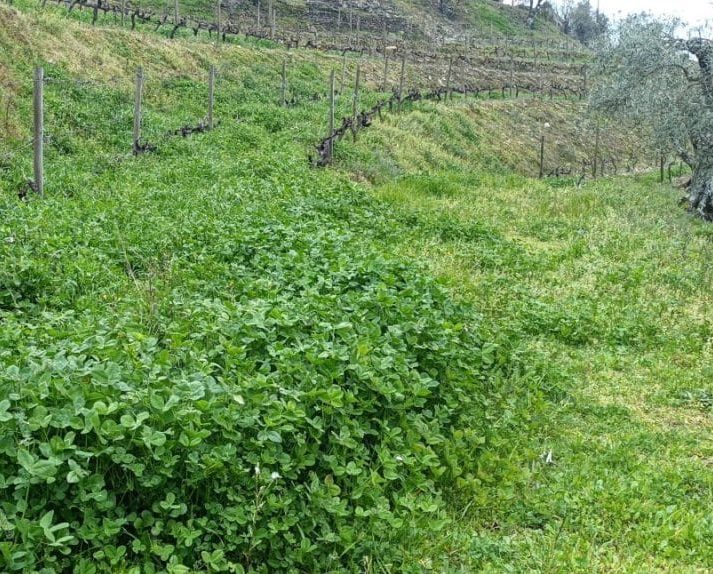
The term “legumes between the lines” refers to a traditional agricultural practice used in vineyard management, including those found in the Douro Valley. It involves planting leguminous plants, such as clover, peas, or beans, in the spaces between the rows of grapevines. This practice is beneficial for several reasons:
- Soil Improvement: Legumes have nitrogen-fixing properties, meaning they can take nitrogen from the air and convert it into a form that plants can use. By planting legumes between the vine rows, they enrich the soil with nitrogen, which is an essential nutrient for plant growth. This natural fertilization helps maintain soil fertility, reducing the need for synthetic fertilizers.
- Weed Control: Legumes can act as a natural weed suppressant. Their dense growth shades the soil, making it difficult for weeds to establish and compete with grapevines for nutrients and water. This reduces the need for manual weeding or herbicide application, promoting more sustainable vineyard management practices.
- Erosion Prevention: The extensive root systems of leguminous plants help bind soil particles together, reducing soil erosion. This is particularly important in steep vineyard terraces, common in the Douro Valley, where erosion control is essential to prevent soil loss and maintain the structural integrity of the vineyard landscape.
- Biodiversity Promotion: Introducing legumes between the vine rows enhances biodiversity within the vineyard ecosystem. These plants attract beneficial insects, pollinators, and soil microorganisms, contributing to overall ecosystem health and resilience.
- Aesthetic Value: Beyond their practical benefits, legumes can also add aesthetic value to vineyard landscapes. Their flowering and foliage provide visual interest, diversifying the appearance of the vineyard and enhancing its overall beauty.
In the context of the Douro Valley, where vine cultivation is a cornerstone of the local economy and cultural heritage, the practice of planting legumes between the lines reflects a commitment to sustainable agriculture and responsible stewardship of the land. It aligns with broader efforts within the wine industry to adopt environmentally friendly practices and preserve the unique terroir of wine-producing regions.