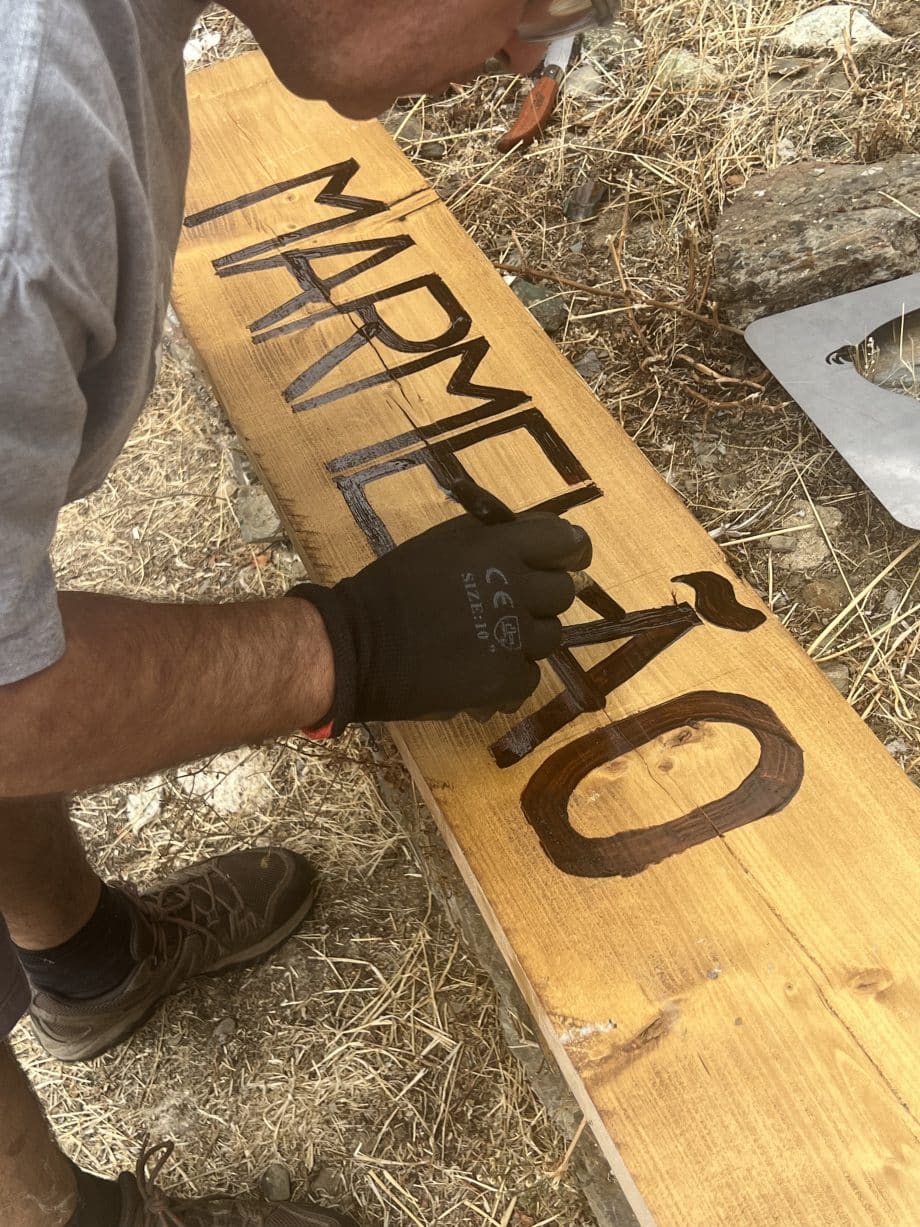
Olives are part of Marmelão in the same quiet, practical way as the vines. They are not a product, not a label, and not something we plan to sell. They exist to be used — in the kitchen, at the table, and in everyday work at O’Porco and Marmelão.
In December 2025, we finally harvested our olives.
It was later than we wanted, and later than usual.
A Late Harvest, by Necessity
In a normal year, we harvest olives in November. This is when the fruit usually reaches the balance we look for: good yield, freshness, and healthy bitterness. In 2025, however, the weather decided otherwise.
The autumn was marked by persistent rain, making it impossible to enter the land at the right moment. Wet soil, slippery slopes, and saturated trees meant we had to wait — even if waiting goes against every instinct a farmer has.
So we delayed.
By early December, the conditions finally allowed us to harvest safely and properly. The olives were ready, darker than usual, softer under the fingers, and carrying the marks of a wet year. We adapted our expectations and moved forward.
Organic, as Always
Our olive trees are worked organically, just like the vineyards. No herbicides, no synthetic treatments, no shortcuts. The ground cover grows freely, insects and birds do their part, and the trees follow their natural rhythm.
Harvesting by hand is slower, but it allows us to respect the trees and the land — especially in a year where conditions are fragile. The work is physical, repetitive, and quiet. Buckets fill slowly. Conversations come and go. The day sets the pace.
Oil Without a Label
The olive oil from Marmelão is not bottled and not sold.
It exists for one reason only: to be used at O’porco and at Marmelão. It goes into the pan, onto bread, over vegetables, and across the table. It is part of the food we cook and share, not a product to be marketed.
Some years there is more, some years less. Quality changes with the season, the rain, and the timing. That variability is accepted — even welcomed. The oil reflects the year just as much as the wine does.
A Different Kind of Harvest
Unlike grapes, olives don’t come with celebration or urgency. There is no finish line, no moment of relief. The work simply ends when the last tree is done.
This year’s late harvest reminded us of something simple: control is limited. Weather decides more than calendars. Farming is less about imposing a plan and more about responding well when plans fail.
From Tree to Table
In the weeks that followed, the oil quietly entered our kitchens. No announcement, no labels, no bottles. Just use.
At O’porco, it became part of daily cooking. At Marmelão, it appeared on the table, without explanation, alongside bread and food. Most people never ask about it — and that feels right.
Closing the Year
The olive harvest is one of the last agricultural acts of the year at Marmelão. It closes the cycle slowly, without ceremony, and prepares the ground for winter.
December 2025 did not give us the harvest we planned — but it gave us the harvest we were allowed to make.
And that, in the end, is enough.