The Douro River is one of the major rivers in the Iberian Peninsula, flowing through Spain and Portugal. Here are some key details about the Douro River:
- Course: The Douro River has a total length of approximately 897 kilometers (557 miles). It originates in the Spanish province of Soria, passes through northern Spain, and then flows southwest into Portugal, where it empties into the Atlantic Ocean near the city of Porto.
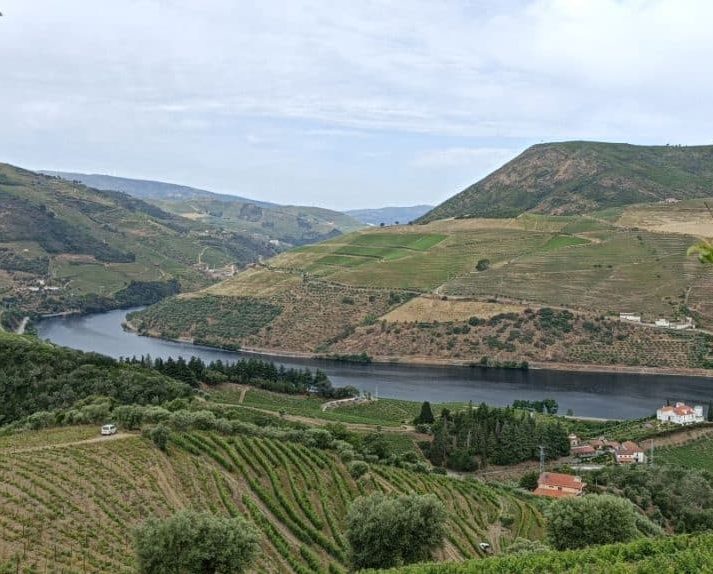
- Significance: The Douro is significant for its role in the production of Port wine, as the Douro Valley in Portugal is one of the world’s oldest and most distinguished wine regions. The terraced vineyards along the Douro River contribute to the production of Port and other fine wines.
- Douro Valley: The Douro Valley, known as the Alto Douro Wine Region, is a UNESCO World Heritage Site. It is characterized by steep terraced slopes along the riverbanks, where grapes are grown for wine production. The valley is renowned for its picturesque landscapes and is a popular destination for wine enthusiasts and tourists.
- Navigation: Historically, the Douro River was an important waterway for transporting goods, including Port wine casks, downstream to the city of Porto. Today, the river is navigable, and there are cruises that offer scenic journeys through the Douro Valley.
- Dams and Reservoirs: Several dams and reservoirs have been constructed along the Douro for hydroelectric power generation and water management. These include the Spanish Almendra Dam and the Portuguese Barragem do Pocinho, Valeira, Bagaúste, Carrapatelo, Crestuma-Lever among others.
- Cities and Towns: The Douro River passes through or near several cities and towns, including Soria, Zamora, and Salamanca in Spain, as well as Peso da Régua, Pinhão, and Porto in Portugal.
The Douro River and its valley are not only significant for their economic and agricultural importance but also for their cultural and scenic value, attracting tourists and wine enthusiasts from around the world.